At CES in Las Vegas, AMD used the global stage to signal how aggressively it plans to compete in the AI hardware race, unveiling new processors aimed at data centers, enterprises, and AI-powered PCs while reinforcing its growing relationship with OpenAI.
New AI-focused chips
At the event, Advanced Micro Devices CEO Lisa Su introduced several new AI-focused chips, led by the MI455 processors designed for data center server racks used by customers such as OpenAI.
AMD also revealed the MI440X, an enterprise-focused version of its MI400 series intended for on-premise deployments where infrastructure is not purpose-built for large AI clusters.
This chip is derived from an earlier processor that the U.S. government plans to deploy in a supercomputing system.
While AMD remains one of Nvidia’s most serious competitors, analysts note that it has yet to match Nvidia’s scale in AI chip sales.
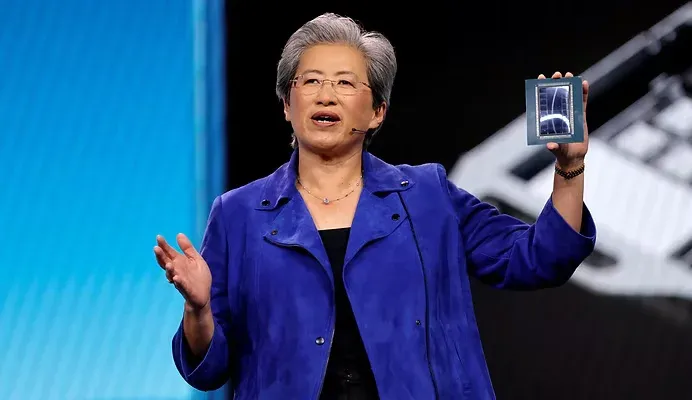
That said, AMD’s October agreement with OpenAI marked a significant endorsement of its hardware and software stack, with executives expecting the partnership to contribute billions of dollars in annual revenue as deployments of MI400-based systems begin this year.
-
During the CES presentation, OpenAI President Greg Brockman joined Su on stage, emphasizing that rapid chip innovation is essential to meeting OpenAI’s massive computing demands.
-
Looking ahead, Su previewed AMD’s MI500 processors, which she said will deliver up to a thousandfold performance improvement over earlier generations when they launch in 2027.
-
The event also highlighted AMD’s broader ambitions beyond data centers, including the launch of Ryzen AI 400 Series processors for AI PCs and Ryzen AI Max+ chips aimed at high-performance local inference and gaming.
The CES announcements came amid a flurry of industry activity. Nvidia showcased its next-generation Vera Rubin platform, described by CEO Jensen Huang as already in full production and expected to debut later this year.
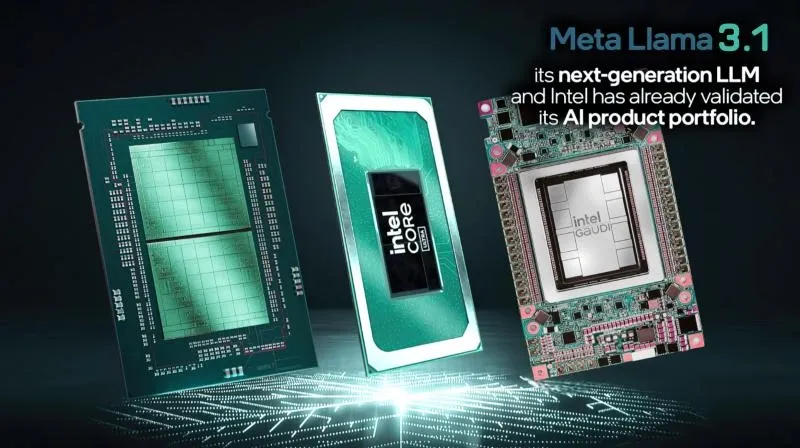
Intel, meanwhile, hosted a separate launch for its Panther Lake chips, scheduled to open for orders shortly.
Together, these announcements underscore how rapidly competition is intensifying as chipmakers race to supply the infrastructure powering the next wave of AI systems.